
NSFW Meaning in Text: What It Really Stands For
Person A: found the funniest clip 😭 NSFW btw, don’t open at work Person B: lol appreciate the heads up, saving for later
That tiny “NSFW” is pulling a lot of weight. It’s not really a word in the sentence — it’s a warning stuck to the front of a link. So when someone asks about the NSFW meaning in text, they’re usually asking what that warning is trying to protect them from.
Here’s the fast version, then the depth.
⚡ The 3-second answer: NSFW stands for “Not Safe For Work.” In a text or post, it’s a warning that the content is adult, explicit, graphic, or otherwise not okay to open around your boss, kids, or strangers. It tells you to wait for a private moment before you tap.
That’s the whole idea. Now let’s unpack how it actually works, where you’ll see it, and how to use it without looking clueless.
What NSFW literally stands for
NSFW = Not Safe For Work. Four letters, one job.
It’s an acronym, which means each letter starts a word. You say it letter by letter (“N-S-F-W”), not as a single spoken word. Some people expand it as “Not Suitable For Work,” which means the same thing.
The key thing to get: NSFW is a label, not a mood. Most texting slang — like smh, fr, or bet — reacts to something. NSFW just tags something. It sits in front of a link, image, or video like a little caution sign.
The real job NSFW does in your messages
Think of NSFW as a heads-up between friends. It says: don’t open this on a screen other people can see.
The “work” part is literal at its root — nobody wants a spicy or shocking thumbnail popping up mid-meeting. But the tag has grown past the office. Today it covers any moment where a screen isn’t private:
- On the bus with someone reading over your shoulder
- In class or a lecture hall
- At the dinner table with family
- Anywhere your kids might glance at your phone
So when a friend drops an NSFW tag in a DM, they’re doing you a favor. They’re giving you the chance to choose when and where to look. That small courtesy is the entire point of the abbreviation.
Everything else NSFW can flag
This is the part most guides skip. NSFW doesn’t only mean “adult content.” It’s a catch-all warning for anything you’d rather not see caught off guard. Here’s the honest breakdown.
1. Adult or explicit content. This is the classic meaning and the most common one — sexual images, videos, or writing. Kept factual here: if a post is tagged NSFW for this reason, it’s meant for adults in private.
2. Gore, injury, or disturbing imagery. A lot of people forget this one. Graphic medical photos, accident footage, or horror clips often get an NSFW tag even though there’s nothing sexual about them.
3. Strong language or shocking topics. Some communities slap NSFW on posts heavy with cursing, dark humor, or upsetting news so people can brace themselves.
4. The joking, exaggerated use. Sometimes NSFW is used loosely to mean “this is wild” or “this is embarrassing,” not literally explicit. Someone might tag a cringe-worthy meme “NSFW 💀” for comedy. Context tells you which one they mean.
Quick rule: if you can’t tell which type it is, treat it as the serious kind and open it in private. Safer bet every time.
Read Also: BR Meaning in Text: What It Stands For (and How to Tell Which One)
Where you’ll actually see NSFW
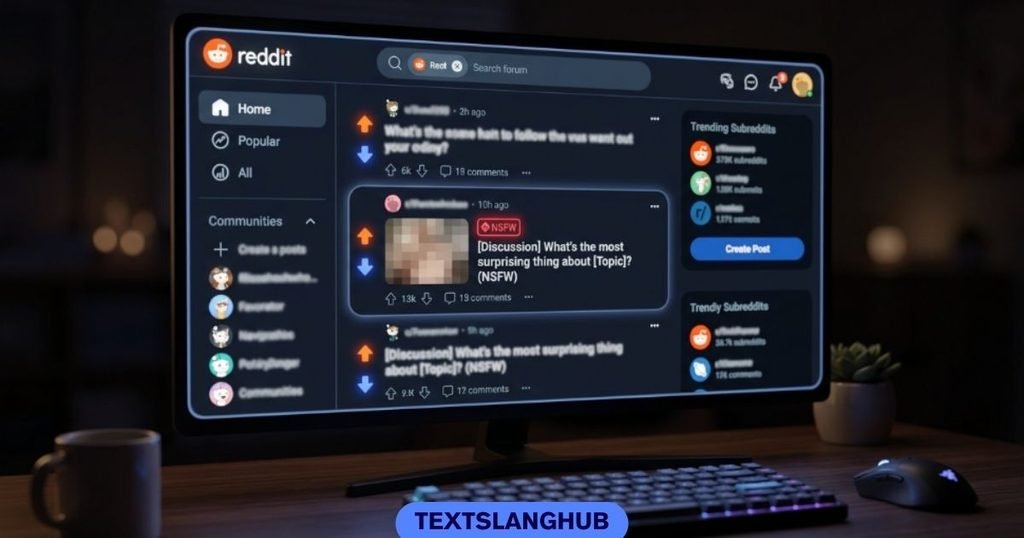
NSFW is an internet-slang veteran, so it shows up almost everywhere. But the vibe shifts by platform.
Reddit. The original home turf. Whole subreddits and individual posts get an official red NSFW tag, and Reddit hides the thumbnail until you confirm you want to see it.
Twitter / X. Used as both a hashtag and a manual content label. Sensitive media gets blurred until you tap through.
Discord. Servers have “NSFW channels” that ask you to confirm your age before entering. If a friend links something in a normal channel, they’ll often type “nsfw” first as a warning.
Tumblr. Long associated with the tag, though the platform now leans heavily on “mature content” filters.
Instagram, TikTok, and Snapchat. These apps are stricter, so you’ll rarely see truly explicit material. Here “NSFW” usually means edgy, shocking, or borderline — more of a caption flag than an official tag.
WhatsApp, iMessage, and group chats. No system-level tag exists here. People just type “NSFW” or “don’t open at work” manually before sending a link. This is where the abbreviation lives most naturally in everyday texting.
NSFW vs SFW: telling them apart fast
The opposite of NSFW is SFW — Safe For Work.
SFW means: go ahead, open it anywhere, nobody will care. It’s the “all clear” sign.
| Tag | Stands for | What it signals |
| NSFW | Not Safe For Work | Wait for privacy before opening |
| SFW | Safe For Work | Open it anywhere, it’s clean |
You’ll sometimes see people ask “SFW or NSFW?” before they click a mystery link. It’s a two-second way of asking, “Is this safe to open right now?”
How to use NSFW yourself
Using the tag well is simple: put it before the thing, not after. A warning after the link is useless — the person already clicked.
Here are copy-paste scripts for different vibes.
Casual friend heads-up:
“NSFW, don’t open at work 😅 but this is hilarious”
Sending in a group chat:
“NSFW warning for the next link, y’all”
Being extra polite (mixed-age chat):
“Marking this NSFW just in case — open when you’re alone”
Asking before you click someone else’s link:
“wait is this SFW or nah? on the train rn”
Setting up a joke:
“technically NSFW but only because it’s so cringe 💀”
Notice the pattern: the tag always comes first, and it’s usually followed by a quick reason. That’s all it takes to look like you know the etiquette.
Is it rude or risky to send?
Short answer: the tag itself is never rude. Sending untagged content is.
Adding “NSFW” is the polite move — it shows you respect the other person’s time and space. Skipping it when you should’ve used it is the actual faux pas.
A few risk notes worth keeping in mind:
- Know your audience. NSFW between close friends is normal. NSFW to a coworker, teacher, or someone you barely know can land badly, even with the tag.
- Never send explicit content to a minor. No tag makes that okay. If you’re not sure of someone’s age, don’t send anything adult, full stop.
- A tag isn’t consent. Warning someone doesn’t mean they want the content. If they say “no thanks,” that’s the end of it.
Used right, NSFW is basically good manners. Used to push content on people who didn’t ask, it’s a problem no abbreviation can fix.
The internet’s quiet tagging rule
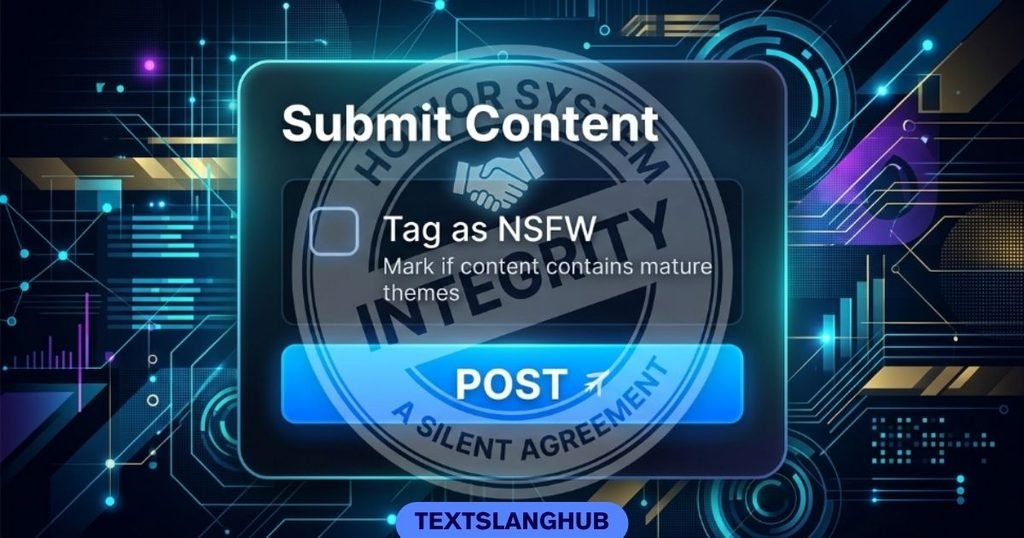
Here’s the nuance almost nobody spells out: NSFW runs on an honor system.
No app forces you to tag your own posts in a private chat. The whole thing works because people choose to warn each other. That unspoken rule — flag it before you share it — is one of the oldest courtesies of internet culture.
Break it, and people notice. Send an untagged shocker into a group chat and you’ll get a wave of “😭 WARN US NEXT TIME.” Tag things reliably, and you build a small reputation as someone who’s safe to open links from.
So the real skill isn’t knowing what NSFW stands for. It’s knowing when something needs the tag before you’ve even typed it. When in doubt, tag it. Over-warning costs nothing. Under-warning costs trust.
Read Also: What Does WYO Mean? The Texting Slang, Decoded
What happens when you tap an NSFW link
Another thing the other guides miss: an NSFW tag often triggers real safeguards, not just a friendly warning.
On big platforms, tagging content NSFW usually does one or more of these:
- Blurs the preview so nothing loads until you tap “show.”
- Adds an age gate that asks you to confirm you’re 18+.
- Hides it from search and recommendations so it doesn’t reach people who didn’t opt in.
- Blocks it from logged-out or restricted accounts entirely.
That’s why an NSFW link can look “broken” if you’re not logged in or your account has safe-mode filters on. It’s not broken — it’s doing its job.
Practical takeaway: if you’re on a shared, work, or school Wi-Fi network, assume someone could see your screen or your traffic. An NSFW tag protects your eyes, not your privacy. Save those links for a personal device on personal time.
NSFW explained for parents and teachers
If you found “NSFW” in a kid’s chat and want the plain-English version: it means “Not Safe For Work,” and it’s a warning label for grown-up, graphic, or shocking content.
A few things worth knowing:
- Seeing the tag doesn’t mean your child created anything. It’s a standard internet word, and they may just be forwarding a warning or reacting to a friend.
- It’s genuinely used as a responsible signal a lot of the time — the tag exists to keep unwanted content from surprising people.
- It’s still a good prompt for a calm conversation about what shows up online, privacy, and who they’re chatting with.
No need to panic at the letters themselves. They’re often a sign someone is trying to be considerate, not careless.
Frequently asked questions
What does NSFW mean on social media?
NSFW means “Not Safe For Work.” It flags posts with adult, graphic, or shocking content that you should open in private.
What does NSFW mean in slang?
It works as a warning tag before a link or image. People also use it loosely to mean “this is wild or embarrassing.”
What does NSFW mean in love?
It marks flirty, romantic, or adult content shared between partners. The tag reminds you to view that message in private.
What does NSFW mean?
The asterisks just add emphasis to the tag. The meaning stays the same: “Not Safe For Work,” so open it privately.
What is the difference between NSFW and NSFL?
NSFW warns about adult or shocking content. NSFL means “Not Safe For Life” and warns about extremely disturbing or graphic material.
Quick takeaway
The NSFW Meaning in Text is simple. NSFW stands for “Not Safe For Work.” People add this tag to warn you about adult, graphic, or shocking content. The tag gives you the chance to wait for a private moment. It protects you from surprises at work, in class, or near your family and friends.
You can use NSFW with confidence now. Always place the tag before the link, never after it. Add a short reason so your friends know what to expect. Never send adult content to anyone underage. Treat the tag as good manners, because it shows real respect for others. Master this small habit, and you will share every link the right way from now on.
Related Guides:
1: What Does TS Stand For in Text? Meaning, Examples & How to Reply
2: KK Meaning in Text: What It Stands For and How to Use It
3: What Does ASL Mean Texting? Here’s the Real Answer
4: HYD Meaning in Text: What It Means and How to Reply
5: DTF Meaning in Chat: What It Really Stands For


3 Comments