IDM Meaning in Text: What It Really Means in Chat, Social Media & Real Conversations
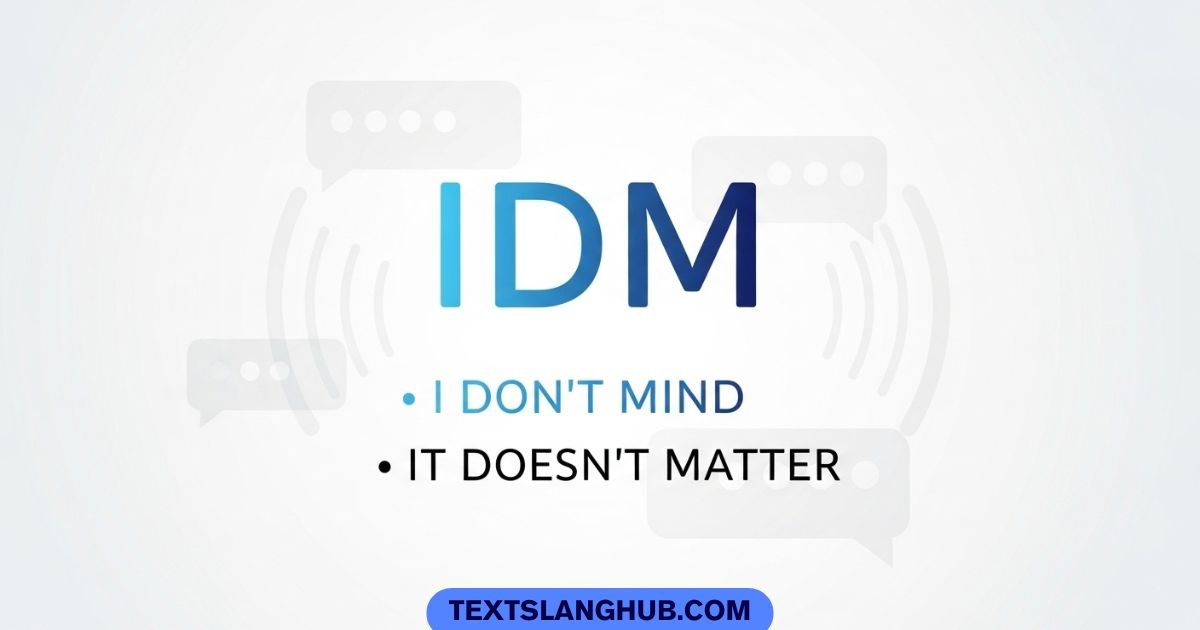
IDM meaning in text is simple and easy to understand. It stands for “I don’t mind.” People use it when they feel okay with a choice. It shows no strong preference in a conversation.
You may see IDM in chats and feel confused at first. It looks short but carries a clear message. Many people use it daily without thinking much. Learning it helps you understand texts faster.
IDM is common in texting and online chat today. It appears on apps like WhatsApp and Instagram. It keeps replies short and smooth in conversations. Knowing IDM makes your communication more clear and natural.
What Does IDM Mean in Text & Chat?
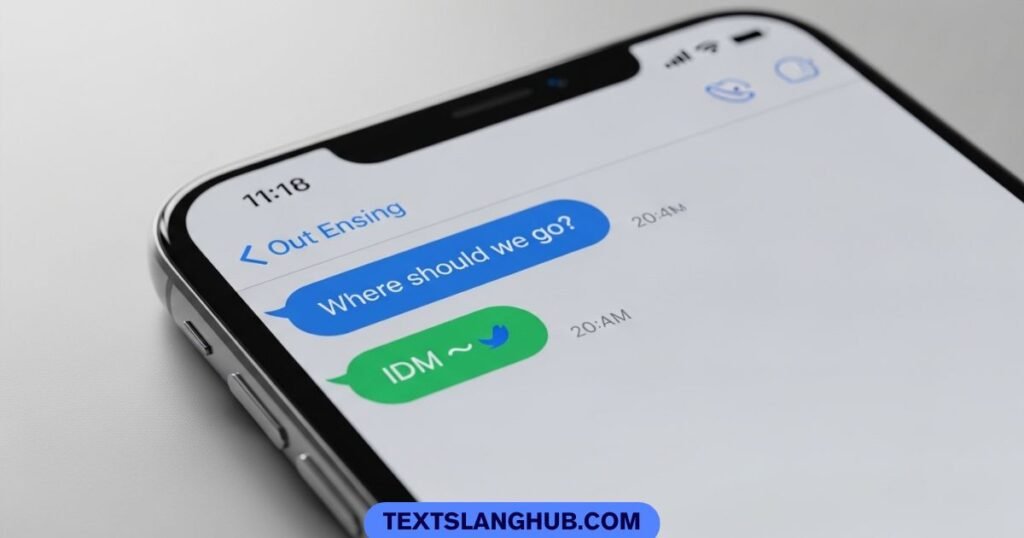
In texting and online chat, IDM stands for “I don’t mind.” It’s used when someone is okay with a suggestion or doesn’t have a strong opinion about a decision.
You’ll usually see IDM in casual conversations. For example, if a friend asks where to go for dinner, replying “IDM” means you’re fine with whatever they choose. It removes pressure and keeps the conversation easy.
The phrase feels neutral. It doesn’t show excitement, but it also doesn’t show disagreement. That’s why it’s so common in modern texting language where people prefer quick and simple replies.
IDM Full Form in Text Messages
The full form of IDM is “I don’t mind.” Each word carries a relaxed meaning. “I” shows personal response, “don’t” removes preference, and “mind” reflects acceptance.
Instead of typing the full sentence, people shorten it to IDM. This fits perfectly into the fast pace of texting, where short forms save time and effort. It’s part of a larger group of common texting abbreviations that simplify communication.
Origin, History & First Use of IDM
IDM comes from early internet chat culture when people started shortening phrases to type faster. In the days of SMS texting, character limits encouraged users to create abbreviations like LOL, BRB, and IDK.
As mobile messaging grew, these shortcuts became part of everyday language. IDM followed the same path. It turned a full sentence into a quick, easy response that people could use without thinking too much.
Over time, IDM spread across platforms like WhatsApp, Facebook Messenger, and Instagram. Today, it’s part of the broader internet slang dictionary that people use daily. Even though new slang appears every year, IDM remains relevant because of its simple and useful meaning.
How IDM Is Used in Everyday Texting

In real life, IDM is all about flexibility. It’s often used when someone wants to keep things easy and avoid making a big decision.
For example, if someone asks, “Should we meet at 6 or 7?” and you reply “IDM,” you’re telling them both options work for you. It helps move the conversation forward without delay.
People also use IDM to avoid conflict. Instead of disagreeing or debating, they choose a neutral response. This is especially common in group chats where multiple opinions can slow things down.
Common Situations Where IDM Is Used
You’ll notice IDM appearing in many everyday situations. It’s not limited to one type of conversation.
- When choosing food or a restaurant
- When making plans with friends
- When responding casually in group chats
- When you truly don’t have a preference
In each case, IDM keeps the conversation smooth. It reduces pressure and makes communication feel more relaxed.
IDM in Gaming, Discord & Online Communities
In gaming lobbies and Discord servers, IDM is a quick way to show flexibility during team decisions. Players use it for hero picks, maps, strategies, or roles without slowing down the game. It keeps chats fast and drama-free, especially in Valorant, Roblox, or MMO raids. This short slang fits perfectly with the fast-paced, low-effort style of online gaming culture.
In Discord communities and subreddits, IDM creates a chill, open vibe. It helps members agree on rules, events, or topics smoothly. However, overusing it in ranked games can sometimes seem passive. Overall, IDM has become a common shorthand that matches the relaxed and adaptable nature of gaming spaces.
Real Chat Examples of IDM
Understanding real examples makes the meaning clearer. Here are a few everyday chat situations where IDM fits naturally:
“Do you want to watch a movie or a series?”
“IDM, you decide.”
“Should we order food or cook at home?”
“IDM, whatever you feel like.”
“Do you want to go now or later?”
“IDM, both work for me.”
In all these cases, IDM shows flexibility. It tells the other person they can choose without worrying about your preference.
The Emotional Tone Behind IDM
Even though IDM is simple, its tone can change depending on how it’s used. Most of the time, it feels polite and cooperative.
In friendly conversations, IDM shows that you trust the other person’s choice. It creates a relaxed vibe and avoids unnecessary back-and-forth.
However, tone can shift in certain situations. If someone uses IDM repeatedly, it might feel like they’re not interested or not putting effort into the conversation. This doesn’t always mean they don’t care, but it can be interpreted that way.
That’s why context matters. The same word can feel warm or distant depending on the situation and relationship.
Read Also: SFS Meaning in Text: What It Really Means in Messages & Social Media (2026 Guide)
IDM Meaning Across Social Media Platforms
The idm meaning in social media is generally the same, but the tone and usage can vary slightly across platforms.
IDM Meaning in WhatsApp Chats
On WhatsApp, IDM is very common. People use it in daily conversations with friends and family. It feels natural and friendly, especially when making plans.
IDM Meaning in Instagram DMs
In Instagram chat, IDM is often used in quick replies. Since conversations move fast, short responses like IDM help keep things simple.
IDM Meaning in TikTok Comments
On TikTok, IDM is less frequent but still appears in replies. It usually carries a casual tone and is used in light conversations.
IDM Meaning in Snapchat Messages
On Snapchat, IDM fits perfectly with the platform’s fast and informal style. Messages are quick, and IDM helps keep things moving without long explanations.
Different Meanings of IDM (Rare Uses Explained)**
1. It Doesn’t Matter
Sometimes, IDM can mean “it doesn’t matter.” This usually depends on context.
For example, if someone apologizes and you reply “IDM,” it may mean the situation isn’t important to you. In this case, the tone is more about reassurance than flexibility.
2. Informal Slang Variations
IDM is sometimes confused with other slang like IDC (I don’t care). These terms may look similar but feel very different.
IDM sounds polite and open, while IDC can feel cold or dismissive. Understanding this difference is important in modern texting language because tone can easily be misunderstood.
When Should You Use IDM (and When to Avoid It)
IDM works best in casual conversations where flexibility is helpful. It’s perfect when you genuinely don’t have a preference.
For example, when making simple plans with friends, IDM keeps things easy. It avoids long discussions and helps decisions happen quickly.
However, it’s not always the best choice. In serious conversations, IDM may sound unclear or passive. People might expect a clear opinion instead.
In professional chat, it’s better to be direct. Instead of saying IDM, you can give a clear answer. This improves communication and avoids confusion.
IDM vs Similar Text Slang
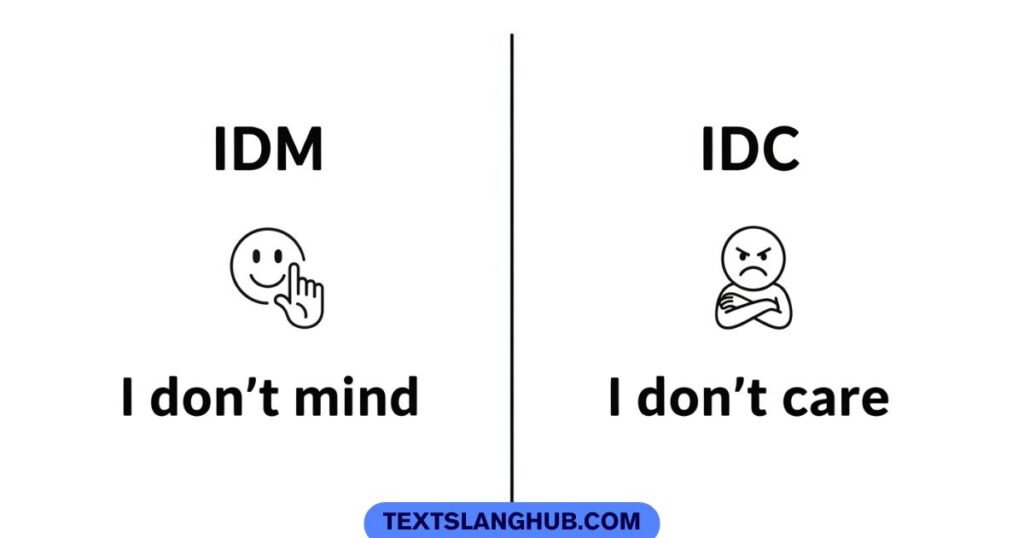
Many people compare IDM with other texting abbreviations. While they may look similar, their meanings and tone are different.
| Term | Meaning | Tone |
| IDM | I don’t mind | Neutral and polite |
| IDC | I don’t care | Cold or blunt |
| IDK | I don’t know | Uncertain |
| IMO | In my opinion | Thoughtful |
The biggest difference is tone. IDM keeps conversations friendly, while IDC can feel negative. Knowing this difference helps you avoid sending the wrong message.
How to Respond When Someone Says IDM
When someone replies with IDM, they’re giving you the choice. This means the next step is usually yours.
You can suggest an option or make a decision. For example, if someone says IDM about food, you can pick a place and move forward.
If you want their opinion, you can ask a follow-up question. This helps keep the conversation balanced and ensures both people are involved.
Understanding how to reply to IDM helps conversations feel more natural and smooth.
Common Misunderstandings & Mistakes
One common mistake is confusing IDM with IDC. These two phrases may look similar, but they carry very different tones.
Another issue is overusing IDM. If you always reply with it, people may feel like you’re not interested in the conversation. Balance is important.
Sometimes, people also misread IDM as disinterest. In reality, it usually means flexibility. But without tone or context, it can be misunderstood.
Being aware of these mistakes helps you use IDM more effectively in real conversations.
Psychology Behind Saying “I Don’t Mind”
There’s a simple reason why people use IDM so often. It makes communication easier and reduces conflict.
When someone says “I don’t mind,” they’re showing flexibility. It creates a cooperative feeling and helps avoid arguments.
In some cases, IDM reflects indecision. A person may not have a strong opinion, so they choose a neutral response.
It can also be a polite habit. Many people use IDM to sound agreeable and maintain a positive tone in conversations.
Is IDM Still Popular? Trends & Usage Today
IDM is still part of modern texting language in 2026. While new slang appears often, simple phrases like IDM remain useful.
Younger users may mix it with newer terms, but IDM continues to be widely understood. It works across different age groups and platforms.
Its simplicity is the reason it lasts. Short, clear, and polite phrases tend to stay relevant longer in digital communication.
IDM Meaning in Professional vs Casual Conversations
In casual conversations, IDM feels natural and friendly. When you’re chatting with friends or family, it shows flexibility and keeps things relaxed. It works well when the topic isn’t serious and both people are comfortable with informal language.
In professional conversations, IDM can feel unclear. In work chats or emails, people usually expect direct answers. Saying IDM might make it seem like you’re unsure or not fully engaged. In these situations, it’s better to give a clear opinion or suggestion instead of using a vague response.
The Future of IDM: Is It Here to Stay or Fading Out?
IDM stays popular among Gen Z for its simplicity in fast chats. Even with voice notes and AI tools, short slang like IDM remains useful. Newer abbreviations may appear, but IDM continues to hold strong on TikTok, Discord, and Instagram due to its clear and neutral tone.
In the coming years, IDM will likely remain common in casual and gaming chats. However, it may fade in professional or older groups as communication styles evolve. Its emotional neutrality gives it good staying power for now.
Read Also: YK Meaning in Text: What It Really Means in Messages, Chat & Social Media
IDM in Group Chats: What It Really Implies
In group chats, IDM often means you’re leaving the decision to others. It signals that you’re okay with any option and don’t want to influence the final choice. This can help speed up decisions when many people are involved.
However, using IDM too often in group chats can shift all responsibility to others. If everyone says IDM, the conversation can stall. That’s why it’s sometimes better to share a small preference, even if it’s not strong, to help the group move forward.
How Tone Changes the Meaning of IDM in Text
Tone plays a big role in how IDM is understood. In a friendly chat, it feels polite and cooperative. It shows that you trust the other person’s decision and are easy to work with.
In a different context, IDM can feel passive or distant. If someone uses it without adding anything else, it may seem like they’re not interested. Adding a small detail, like “IDM, both sound good,” can make the tone feel warmer and more engaged.
Common Alternatives to IDM in Texting
Sometimes, people use other phrases instead of IDM to express the same idea. These alternatives can sound more natural depending on the situation. For example, “I’m fine with anything” or “Up to you” carries a similar meaning but may feel more personal.
Choosing the right alternative depends on tone. If you want to sound more involved, you can say something like “I’m okay with either, but I slightly prefer this.” These small changes help make your response clearer while keeping the conversation smooth.
FAQ’s
What does IDM mean in texting?
IDM means “I don’t mind.” It shows that you’re okay with something and don’t have a strong preference.
What does IDM mean in Gen Z?
In Gen Z texting, IDM means “I don’t mind.”
It shows a relaxed, flexible attitude in chats and decisions.
What is the full meaning of IDM?
IDM stands for “I don’t mind.”
It means you’re okay with something and have no strong preference.
Is “idm” considered slang?
Yes, IDM is a texting slang abbreviation.
It’s commonly used in casual chats and online conversations.
Is IDM still used today?
Yes, IDM is still common in texting and social media, especially in casual conversations.
Conclusion
The idm meaning in text is simple and useful for daily communication. It stands for “I don’t mind” and shows that a person feels okay with a choice. People use it when they want to stay flexible and keep conversations easy. It helps avoid small arguments and makes chatting smooth. You can use it with friends, family, and even in group chats when the topic is casual.
You should use IDM with care in serious or professional situations. It may sound unclear if a clear answer is needed. In most casual chats, it works well and feels polite. When you understand the idm meaning in text, you can reply with confidence and keep your messages clear. This small phrase can make your conversations simple and comfortable.
Related Guides:
1: SFS Meaning in Text: What It Really Means in Messages & Social Media (2026 Guide)
2: YK Meaning in Text: What It Really Means in Messages, Chat & Social Media
3: What Does IMK Mean in Text? Full Meaning, Usage & Real Chat Examples (2026 Guide)
4: YH Meaning in Text: What It Really Means in Chat, Messages & Social Media
5: FS Meaning in Text: What It Really Stands For in Chat & Social Media