
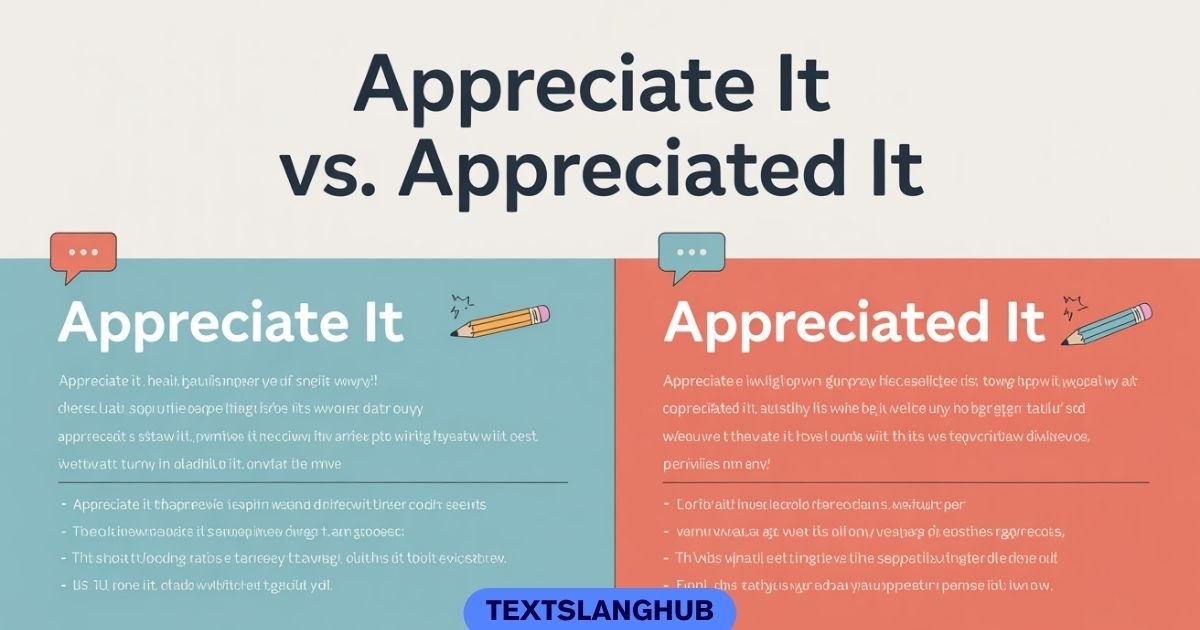
Appreciate It vs Appreciated It: When to Use Each
Someone covers your shift. You go to fire off a quick thank-you, and you freeze: is it appreciate it or appreciated it? Both are real. Both are polite. But they don’t mean the same thing — and in a text, they don’t feel the same either.
If you’ve ever paused over appreciate it vs appreciated it, the short version is tense: present versus past. The longer version is about tone, and that’s where most people trip.
The 5-second answer: Appreciate it vs appreciated it comes down to timing. “Appreciate it” is present tense — you’re grateful right now, usually for something just done or about to happen. “Appreciated it” is past tense — you’re thanking someone for something that already wrapped up. Same gratitude, different moment.
Appreciate it vs appreciated it: the core difference
Strip everything else away and it’s one thing — tense.
“Appreciate it” is present. The gratitude is live, happening as you type. It fits the moment someone helps you or is about to.
- “Thanks for grabbing my coffee — appreciate it.”
- “You’ll send that over? Appreciate it.”
“Appreciated it” is past. It points back at something that’s already finished.
- “I appreciated it when you stayed late to help me pack.”
- “Just wanted to say I appreciated that ride last week.”
Both are grammatically correct. You’re just aiming them at different points in time.
What each phrase actually means when you text it
Here’s the part the grammar sites skip. In a chat, tense also carries tone.
“Appreciate it” reads warm and immediate. It’s you, right now, glad. It’s the default for a casual, in-the-moment thank-you.
“Appreciated it” points backward, so it can feel a touch more reflective — or a touch more distant. You’re closing the loop on something that’s over. In the right spot that’s lovely (“I really appreciated that”). In the wrong spot it can read like you’re filing the moment away.
Small shift, real difference. The present tense keeps the door open; the past tense gently shuts it.
Watch out for the one-word “Appreciated”
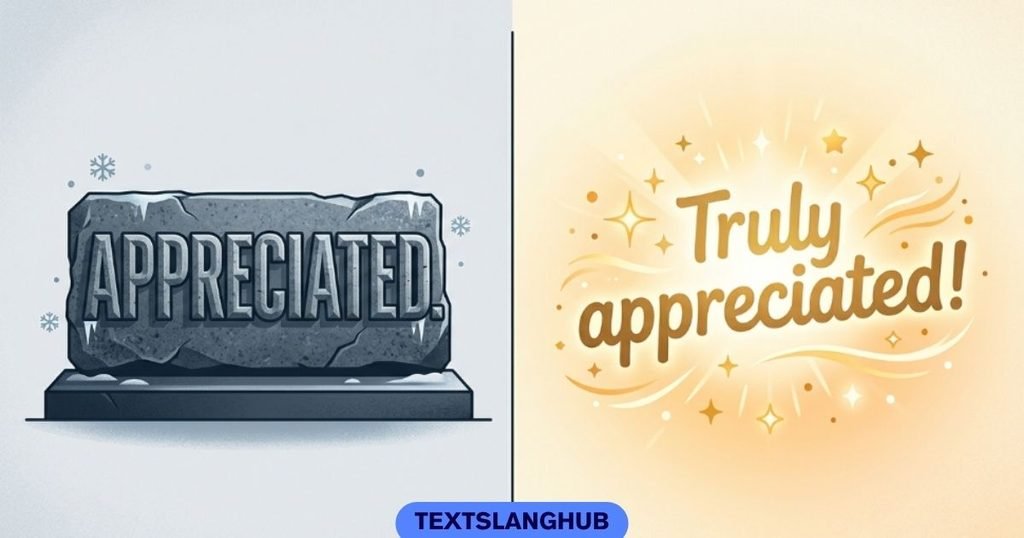
This is the trap nobody warns you about.
Drop it to a single past-tense word — “Appreciated.” — and the vibe changes fast. On its own, it can land cold, clipped, even a little final. It’s the texting cousin of “Noted.”
Jordan: hey I finished the deck and added your notes 🙌
Sam: Appreciated.
Sam might mean it warmly. But that lone word with a period reads like the conversation just got shown the door. Compare:
Sam: appreciate it!! saved me an hour 😅
Same gratitude, completely different temperature. If you want to sound thankful and not clipped, keep it present and add a little life to it. “Appreciated” solo is fine for a coworker you’re wrapping with — risky for a friend you actually like.
Read Also: SMH Meaning in Text: The Full 2026 Decoder
See how they play out in real chats
Something happening now → present:
Maya: omw, I’ll drop the keys at the desk
Leah: perfect, appreciate it 🙏
Something already done → past:
Dev: how’d the move go?
Priya: exhausting lol but honestly I appreciated you lending the van, it saved us
Where past tense sounds slightly off:
Alex: I’ll send the invoice tonight
Chris: appreciated it
That last one feels weird, right? Chris is thanking Alex for something that hasn’t happened yet. The tense clashes with the timing. “Appreciate it” is the natural fit there.
Which one to send — a quick side-by-side
| Situation | Use | Why |
| Someone’s helping right now | appreciate it | gratitude is live |
| Someone’s about to do you a favor | appreciate it | present looks forward |
| A standing, general thank-you | appreciate it | it’s ongoing |
| Thanking for a past, finished thing | appreciated it | past matches the timing |
| Recapping a moment that’s over | appreciated it | you’re looking back |
| Quick casual reply to a friend | appreciate it | warmer, less final |
| Formal note about last week’s help | I appreciated it | reflective and polite |
The cheat code: if it’s now or soon, say “appreciate it.” If it’s already over, say “appreciated it.”
Which version belongs in a work email?
Both, but for different jobs — and this is where getting it right makes you sound sharp.
Use “I appreciate it” for anything ongoing or immediate:
“Thanks for looping me in on this — I appreciate it.”
Use “I appreciated it” to thank someone for a specific thing that already happened:
“I appreciated your patience while we sorted out the delay.”
One quick pro note: in a professional email, keep the “I.” Bare “Appreciate it” is friendly-casual and great for Slack or a text, but in a client email it can read a bit blunt. “I appreciate it” or “I really appreciate it” hits the polite, warm register you want.
Is “appreciated it” cold or rude?
Not by itself. Past tense is completely normal English, and “I really appreciated that” is genuinely warm.
The coldness only creeps in with the stripped one-word “Appreciated.” — especially with a period, especially to someone close. It’s the delivery, not the word.
If you get one and it stings, don’t overthink it — most people don’t intend the chill. And if you’re sending to someone you care about, warm it up. A few copy-paste fixes:
- “appreciate you 🙏”
- “seriously, thank you — that helped a ton”
- “you’re a lifesaver, appreciate it!!”
- “meant a lot that you did that 💛”
Each one says thanks without the door-slam energy of a solo “Appreciated.”
Read Also: What Does CYC Mean in Text? The Fast, No-Fluff Answer
The mistakes people make with both
Using past tense for something not done yet. “I’ll send it later.” → “appreciated it” clashes. If it hasn’t happened, stay present: “appreciate it.”
Over-clipping to “Appreciated.” with people you actually like. Fine for a quick work close; cold for a friend. Add a word or an emoji.
Assuming past tense means the same warmth as present. It doesn’t quite. Present feels open and live; past feels like you’re wrapping up. Pick the one that matches the mood you want.
Dropping the “I” in formal writing. Great in texts, a little abrupt in emails. In professional notes, lead with “I.”
Reading too much into someone else’s tense. Plenty of people fire off “Appreciated” out of habit, not attitude. Context and your history with them matter more than the exact word.
FAQ
Should I say “appreciated” or “appreciate it”?
Say “appreciate it” for help happening now or soon. Say “appreciated” for help that already finished.
Is it appropriate to say “appreciate it”?
Yes. It works well in texts, chats, and casual emails. For formal notes, use “I appreciate it.”
What’s the difference between appreciate and appreciated?
“Appreciate” is present tense for right now. “Appreciated” is past tense for something already done.
What to say instead of “I appreciate it”?
Try “thank you so much,” “that means a lot,” “you’re a lifesaver,” or “I’m grateful for your help.”
How do I say “I appreciate it professionally”?
Use “I truly appreciate your help” or “Thank you, I appreciate your support.” Keep the “I” and stay polite.
The bottom line
The whole idea of Appreciate It vs Appreciated It comes down to one small thing: time. You say “appreciate it” when someone helps you right now or plans to help you soon. You say “appreciated it” when the help already happened and the moment is over. Both phrases are correct. You just need to match the words to the right moment.
Tone matters too. “Appreciate it” sounds warm and friendly. A short “Appreciated” can sound cold, so you can add a kind word or an emoji to soften it. Now you know how to pick the right one every time. Choose the moment first, then choose the tense. Your thank-you will always sound clear, polite, and truly kind.
Related Guides:
1: STFU Meaning in Text: Rude, Playful, or Both?
2: FML Full Form in Text: What It Really Means and How to Reply
3: WTH Meaning in Text: What It Really Stands For
4: What Happen or What Happened? The Simple Answer
5: Adapter vs Adaptor: What’s the Difference?

2 Comments