
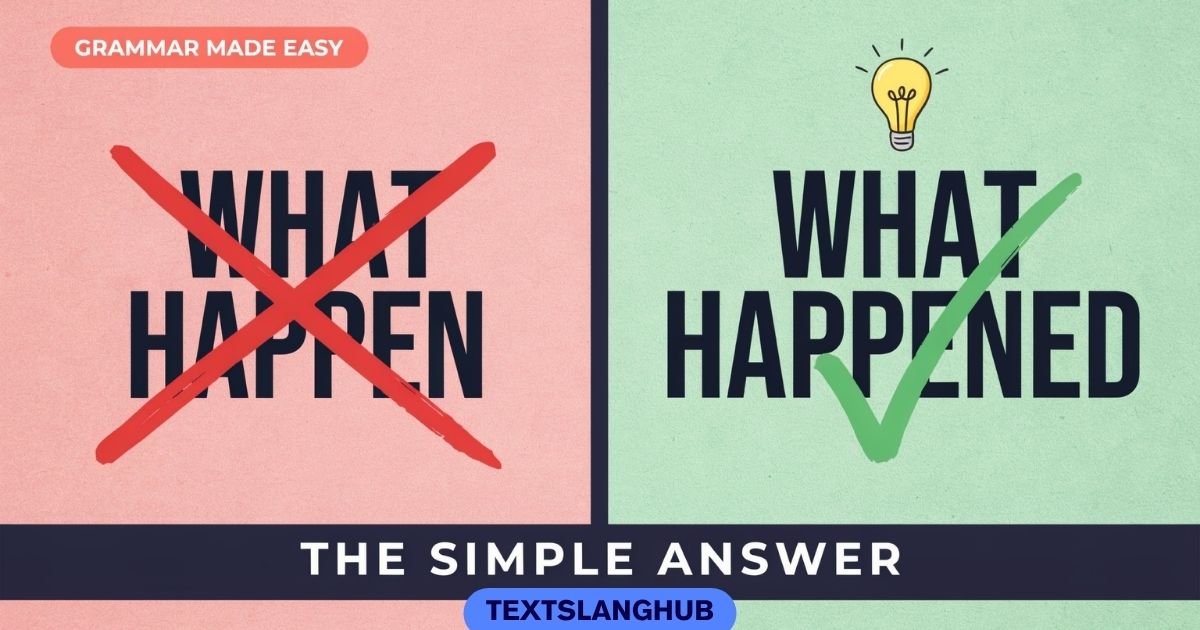
What Happen or What Happened? The Simple Answer
Something goes sideways, you grab your phone, and you freeze mid-text. Do you type “what happen” or “what happened”? It’s a tiny choice that trips up native speakers and English learners alike. The good news: the rule takes five seconds to learn, and once it clicks, you’ll never second-guess it again. This guide settles “what happen or what happened,” shows you the one that’s actually correct, and reveals the moments when the shorter version is totally okay to send.
Quick answer: “What happened” is the grammatically correct choice when you’re asking about something that already occurred, because “happened” is the past-tense form of the verb. “What happen” is not standard English, though it shows up in casual texting and in some English dialects where dropping the “-ed” is normal.
Why “What Happened” Wins
Here’s the whole rule in one line: if the thing you’re asking about already took place, use happened.
“Happened” is the past-tense form of the verb “happen.” Past tense means it’s over and done. Someone tripped, a plan fell through, a game ended — all of that lives in the past, so you ask “what happened?”
“Happen” on its own is the base form. In standard English, you don’t pair it with “what” to ask about a finished event. “What happen?” leaves the grammar half-built, like a step got skipped.
Try the swap test with a different verb:
- “What happened?” → “What broke?” ✔ sounds right
- “What happen?” → “What break?” �’✘ sounds off
If the past-tense version sounds natural and the base form sounds broken, “happened” is your word.
So Is “What Happen” Ever Correct?
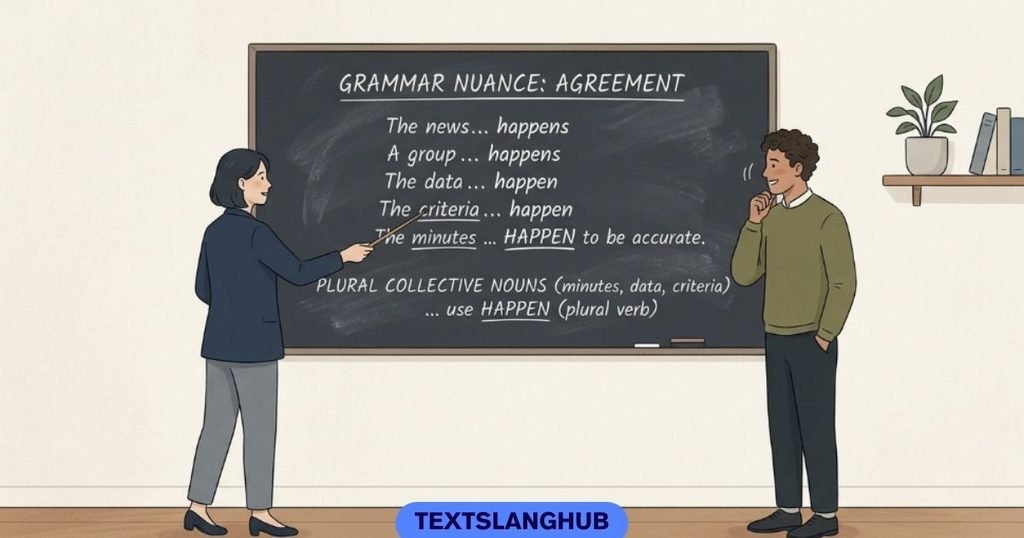
Yes — in a few specific places. It’s worth knowing them so you don’t “fix” someone who wasn’t wrong in the first place.
Several English dialects and creoles drop the “-ed” as a normal feature, not a slip. In parts of the Caribbean, in West African English, and in Singlish (Singapore), “what happen” or “wa happen” is everyday, natural speech. It follows its own grammar — it isn’t a broken copy of the textbook version.
You’ll also catch “what happen” in fast spoken English, where the “-ed” gets swallowed so quickly it nearly disappears. Say “what happened” at full speed and listen — the ending almost vanishes on its own.
So the honest take on “what happen or what happened”: “what happened” is correct in standard written and formal English, while “what happen” can be perfectly natural in certain dialects and in quick, relaxed speech.
Read Also: Adapter vs Adaptor: What’s the Difference?
When Texting Lets You Drop the “-ed”
Texting runs on its own rulebook, and it’s a lot looser than an essay.
In a fast group chat, plenty of people fire off “what happen” or even “wat happen” on purpose. It’s not that they’ve forgotten the grammar — they’re trading polish for speed.
Person A: bro i’m crying 😭 Person B: what happen
Nobody’s confused. The tone is casual, the message lands, and no one’s grading it.
But there’s a line. That looser spelling reads as friendly and low-effort — perfect with friends, risky with a boss. Drop “what happen” into a work Slack and it can look careless.
Rule of thumb: with friends on WhatsApp, Snapchat, or Instagram DMs, “what happen” is fine. Anywhere your writing is being judged, use “what happened.”
See It in Real Chats
Watch how each form fits its own moment.
Polished (texting a coworker):
Priya: Heads up — the client call just got moved. Sam: Oh no, what happened?
Clean, correct, respectful. “Happened” fits because Sam’s asking about a change that already occurred.
Super casual (best friends):
Maya: i’m never going back to that salon 💀 Jordan: LOOL what happen
Here “what happen” matches the joking, dramatic energy. Correcting Jordan would feel stranger than the missing “-ed.”
The one to avoid:
❌ “What happen to your phone?” ✅ “What happened to your phone?”
The phone already broke, died, or got lost — that’s past tense, so “happened” is the natural fit even in a chill chat.
The Hidden Tone in “What Happened to You?”
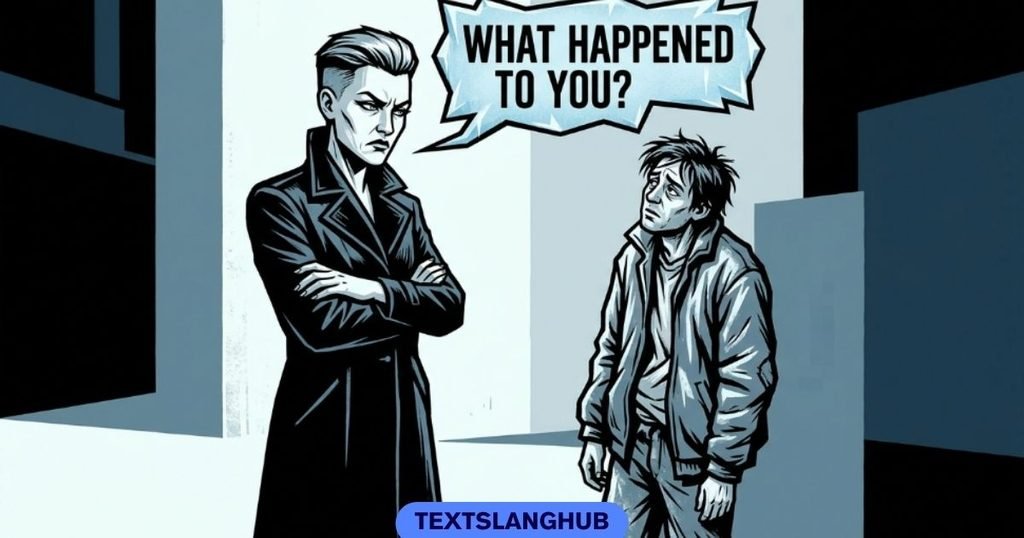
Here’s a nuance most grammar posts skip: “what happened to you?” carries feelings, not just tense.
Said gently, it’s pure concern — you noticed a friend seems off and you care. Said flat or clipped, the exact same words can sound like an accusation, as if they messed up and owe you an explanation.
Caring: “Hey, you went quiet all week — what happened to you? 🥺” Accusing: “You never showed up. What happened to you.”
Same grammar, opposite vibe. The tense is right either way; it’s the punctuation, emojis, and context that steer the mood. So even when your grammar is perfect, read the room before you send.
“What Happened,” “What’s Happening,” or “What Was Happening?”
These look like cousins but ask different things. Swapping one for another quietly changes your meaning.
| Phrase | It’s asking about | Quick example |
| What happened? | A finished event (past) | “You look shaken — what happened?” |
| What’s happening? | Right now, or a casual “what’s up?” | “What’s happening this weekend?” |
| What happened to you? | A change in a person or thing (past) | “What happened to you after the move?” |
| What was happening? | An ongoing scene in the past | “What was happening when the lights went out?” |
Pick by timing. Over and done → happened. Going on right now → happening.
The Mistakes People Make
A handful of slip-ups show up again and again — especially for English learners.
Dropping “-ed” in writing. In an essay, email, or caption, “what happen” reads as an error. Fixing this one clears up most confusion.
Mixing “did” with “-ed.” Writing “what did happened” is a classic mistake. Once you add “did,” the main verb goes back to its base form — so it’s “what did happen?” (emphatic, a little formal), never “what did happened.”
Using the wrong tense. Asking “what’s happening?” about a crash that already ended mixes present and past. If it’s over, you want “what happened?”
Over-correcting others. Telling a friend their casual “what happen” is “wrong” — when they’re texting in a relaxed vibe, or speaking a dialect where it’s completely standard — usually says more about you than about their grammar.
Read Also: That’s Mean vs That Means: What’s the Difference?
What Happen or What Happened: A 3-Second Decision Guide
Run through this before you hit send.
- School, work, or a stranger? → Use “what happened.”
- Close friend, casual, past event? → “What happen” is fine — but “what happened” is never wrong.
- Is the thing still going on right now? → You want “what’s happening?” instead.
- Writing anything formal — email, caption, essay? → Always “what happened.”
When in doubt, “what happened” is the safe, correct pick every single time.
FAQ
Is it “what happens” or “what happened”?
Use “what happens” for something general or ongoing now; use “what happened” for an event that’s already over. Timing decides it.
When to use “happen” and “happened”?
Use “happen” (base form) with helpers like does/did/will — “what does happen.” Use “happened” alone for a finished past event — “what happened.”
What did happen or what happened?
Both are correct. “What happened” is the everyday question; “what did happen” is emphatic or formal, used to press for an answer. Never write “what did happened.”
Is “what happen” or “what happened” the correct grammar?
“What happened” is correct standard grammar (past tense). “What happen” isn’t standard, though it’s normal in casual texting and some English dialects.
What does “what happened” mean?
It’s a past-tense question asking about an event that already occurred. It means “tell me about the thing that took place.”
The Bottom Line
So, “what happen or what happened”? For anything formal, factual, or meant to impress, “what happened” is the correct, past-tense choice — every time. Save “what happen” for relaxed texts with friends, or recognize it as natural speech in the dialects where it belongs. Learn that one-line rule, and you’ll type the right one without thinking twice.
Related Guides:
1: SS Meaning in Text: What It Really Means
2: SP Meaning in Text: Every Meaning, Decoded Fast
3: IMAO Meaning: What It Really Stands For (and Why It’s Often Just LMAO)
4: Hmm Meaning in Text: What It Signals and How to Reply
5: Flew or Flown? The Simple Rule (With Easy Examples)


2 Comments